

In the field of industrial fluid control, ball valves have become essential equipment for many enterprises due to their advantages of quick opening/closing and strong flow capacity. Among them, floating ball valves and trunnion ball valves are two mainstream product types, each with distinct characteristics in design and performance. As a company that manufactures both products, we will objectively analyze the core differences between the two from the perspectives of structural principle, sealing performance, operation & installation, and application scenarios, providing professional references for your selection.
Core Structure: Fundamental Difference in Ball Fixing Method
The performance differences between the two types of ball valves stem from the fundamental difference in their ball support and fixing structures, which directly determines their subsequent adaptability to working conditions
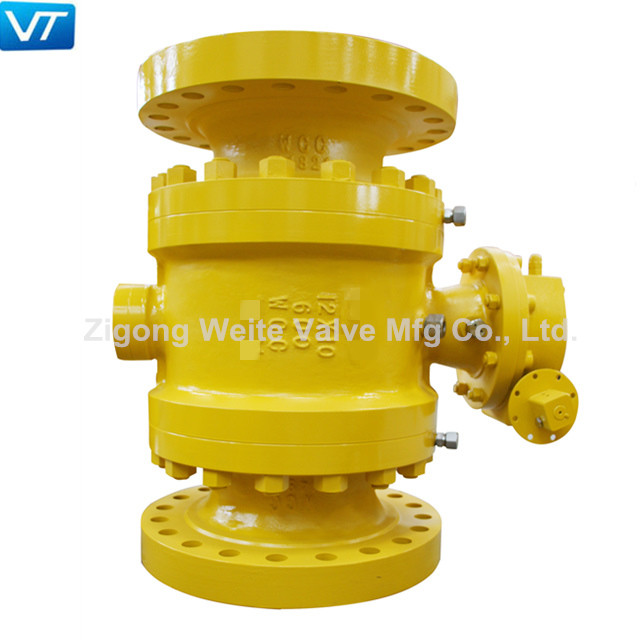
1. Trunnion Ball Valve: Dual-Support Positioning for Greater Stability
Trunnion ball valves adopt a "dual-support" design. The top of the ball is fixed by the stem, and the bottom is accurately positioned by a dedicated trunnion (a special shaft). This dual-support structure of "stem + trunnion" firmly locks the ball in the center of the valve cavity. Even under high-pressure working conditions, it can effectively prevent the ball from shifting, laying a solid foundation for sealing stability and operational convenience.
Meanwhile, trunnion ball valves are equipped with spring-loaded floating seat assemblies. The valve seats can adaptively adjust the fit with the ball through the preload force of the springs, which not only optimizes the sealing effect but also compensates for wear on the sealing surface, extending the service life of the valve.
2. Floating Ball Valve: Single-Support Design Dependent on Pressure
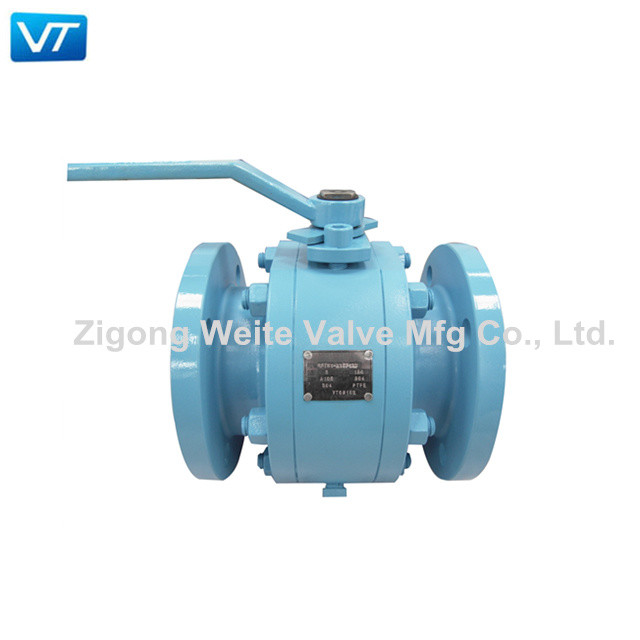
The ball of a floating ball valve is only supported by the top stem (single-support structure), with no fixed structure at the bottom. Thus, the ball can slightly "float" in the valve cavity. Its sealing principle relies on medium pressure: when the valve is closed, the medium pressure pushes the ball against the outlet-side valve seat, achieving sealing through tight contact between the ball and the seat.
However, this single-support floating design has limitations: under high-pressure conditions, the ball is prone to shifting due to pressure, which may increase wear on the sealing surface and operating resistance; under low-pressure or vacuum conditions, the contact pressure between the ball and the seat is insufficient, making it difficult to ensure a reliable sealing effect.
Sealing Performance: Difference Between Full-Condition Adaptability and Pressure Dependence
Sealing performance is a core indicator of valves, and the two product types show significant differences in sealing stability and pressure adaptability:
1. Trunnion Ball Valve: "Bubble-Tight Seal" Across All Pressure Ranges
Relying on spring-loaded upstream sealing technology and the dual-support fixed structure, trunnion ball valves can maintain stable sealing across all pressure ranges. Whether under low pressure, normal pressure, extremely high shut-off pressure, or even vacuum conditions, the valve seat can fit tightly with the ball, meeting the "Bubble-Tight Seal" standard and fundamentally eliminating the risk of medium leakage.
In addition, trunnion ball valves adopt a dual-independent seat design, enabling bidirectional sealing (i.e., both ends of the valve can serve as the upstream end). The sealing effect is not affected by the medium flow direction, making them suitable for more complex working conditions.
2. Floating Ball Valve: Sealing Effect Restricted by Medium Pressure
The sealing effect of floating ball valves is highly dependent on medium pressure. Effective sealing can only be achieved when the pressure is sufficient to push the ball against the valve seat. Therefore, under low-pressure or vacuum conditions, sealing failure is likely to occur; under high-pressure conditions, ball shifting will aggravate seat wear, shortening the service life of the sealing component.
Most floating ball valves are designed for unidirectional sealing, requiring strict alignment with the medium flow direction during installation. If the installation direction is incorrect, it will directly lead to sealing failure, increasing on-site commissioning costs and production risks.
Operation & Installation: Comparison Between Convenience and Restrictions
1. Operating Torque: Trunnion Ball Valves Are More Labor-Saving with Lower Maintenance Costs
The dual-support structure of trunnion ball valves distributes the force on the ball, avoiding additional friction caused by ball shifting. Combined with the adaptive adjustment of the spring-loaded valve seats, trunnion ball valves can maintain low operating torques even under high-pressure conditions. This reduces the power requirement for valve opening/closing, minimizes wear on the actuator, and significantly lowers maintenance costs during long-term use.
Due to the floating nature of the ball, floating ball valves are prone to excessive friction between the ball and the seat under high-pressure conditions. Their operating torque is much higher than that of trunnion ball valves, which may cause actuator failure during long-term use and increase the frequency and cost of maintenance.
2. Installation Restrictions: Trunnion Ball Valves Are More Flexible; Floating Ball Valves Require Precise Alignment
The bidirectional sealing design of trunnion ball valves means they have no installation direction restrictions. During on-site installation, there is no need to repeatedly confirm the medium flow direction—whether either end of the valve is used as the upstream end, a reliable sealing effect can be guaranteed. This greatly improves installation efficiency, especially suitable for scenarios where the medium flow direction may change.
Floating ball valves must be installed strictly in accordance with the medium flow direction. If the installation direction is wrong, disassembly and re-adjustment are required, which not only wastes time but also may affect the sealing performance due to repeated disassembly and assembly, increasing the risk of installation errors.
Application Scenarios: Selecting Based on Needs to Match Different Working Conditions
1. Trunnion Ball Valve: Preferred for High-Pressure, High-Sealing-Demand Scenarios
With excellent structural stability and full-condition sealing capability, trunnion ball valves are widely used in high-pressure (PN16 and above), high-sealing-demand key fields, such as petrochemical industry, long-distance natural gas pipelines, and high-pressure storage tank outlets. In vacuum environments, scenarios with easy medium leakage, or situations where the medium flow direction is variable, trunnion ball valves show more prominent advantages, providing reliable guarantees for production safety.
2. Floating Ball Valve: Cost-Effective Choice for Low-Pressure General Scenarios
Floating ball valves have relatively lower costs and can maintain stable sealing under low-pressure (PN10 and below) and normal-temperature conditions. They are more suitable for general industrial fluid control scenarios, such as low-pressure compressed air pipelines, general industrial cooling water circulation systems, and low-pressure solvent transfer pipelines. It should be noted that they are not recommended for key systems with high-pressure or high-sealing requirements, as this may increase the risk of leakage and affect production stability.
Floating ball valves and trunnion ball valves each have their own technical advantages and application scenarios—there is no absolute "superiority" between them. The key lies in whether they match the actual working conditions. Our company has professional production capabilities for both products. Based on your working condition pressure, sealing requirements, medium characteristics, and other needs, we can provide customized solutions and selection suggestions to help you carry out production operations efficiently and safely. For further information on product technical parameters or to obtain a solution, please feel free to contact us.